
Logo placement changes how professional workwear looks, how easily branding is noticed and which decoration method will work best. A placement that suits a polo shirt may not suit a zipped hoodie, hi-vis jacket or garment with pockets and seams.
This guide covers the most useful positions for custom workwear and explains when to choose embroidery or DTF printing.
Front left chest
The front left chest is the most common position for business logos. It is visible during conversations, works across polos, T-shirts, sweatshirts, fleeces and many jackets, and gives a professional uniform appearance.
A typical logo is compact rather than oversized. The exact size depends on the logo shape: a wide horizontal logo may need more width, while a circular badge can remain smaller. Embroidery is often chosen here for a premium finish, although detailed, colourful artwork may suit DTF.
Front right chest
The right chest can be used for a second logo, staff name, role or accreditation. It can also replace the left position when pockets, zips or garment construction make the usual area unsuitable.
When both chest positions are decorated, keep the visual weight balanced. Two very different sizes can make the garment look uneven.
Large back print
A large back design provides the strongest visibility at a distance. It is useful for trades, delivery teams, event staff and employees who need to be identified from behind.
DTF printing is often a practical choice because it can reproduce larger, multicolour artwork without the weight and stiffness of a very large embroidered area. Keep important text large enough to read and avoid placing the design too low, where it may be hidden when the wearer sits down.
Mid-back and upper-back positions
An upper-back logo sits across the shoulder-blade area and works well for website addresses, team names or a smaller secondary mark. A mid-back placement allows more height but should still be checked against hoods, hair, jacket panels and reflective strips.
Left and right sleeves
Sleeve decoration is useful for secondary branding, certifications, flags, social handles or sponsor logos. The printable or embroiderable area is smaller and may be interrupted by seams, cuffs or pockets, so simplified artwork usually works best.
On short sleeves, position the design so it remains visible without wrapping too far around the arm. On jackets and long sleeves, check that waterproof seams or reinforcement panels do not interfere.
Hood printing
A hood print can add distinctive branding to hoodies, but it should only be offered on garments with a suitable hood panel. Designs are usually kept compact and positioned to remain readable when the hood is down.
Heavy embroidery can affect how the hood sits, so DTF is often more suitable for larger hood artwork. Always test the exact garment because seams and drawcord channels vary.
Zip garments and pockets
A central front print is normally unsuitable for full-zip garments because the zip cuts through the artwork. Use left chest, right chest, sleeve or back positions instead. Similarly, avoid printing across pockets, storm flaps and heavily textured panels unless the decoration method has been tested.
Choosing the right print size
| Placement | Typical use | Practical guidance |
|---|---|---|
| Left or right chest | Company logo or staff name | Keep compact and proportionate to the garment |
| Large back | High-visibility branding and contact details | Use readable text and check the smallest garment size |
| Sleeve | Secondary logo or accreditation | Simplify detail and avoid seams |
| Hood | Additional hoodie branding | Check panel shape and how the hood rests |
Embroidery or DTF for each placement?
Embroidery is a strong choice for compact logos on polos, fleeces and jackets. DTF is usually better for large back designs, gradients, photographic artwork and highly detailed full-colour graphics. Read our full embroidery vs DTF guide before deciding.
Plan the whole uniform, not one garment
Use consistent logo positions across the range where possible, but allow for garment construction. A polo, sweatshirt and softshell can look coordinated even when minor placement adjustments are needed.
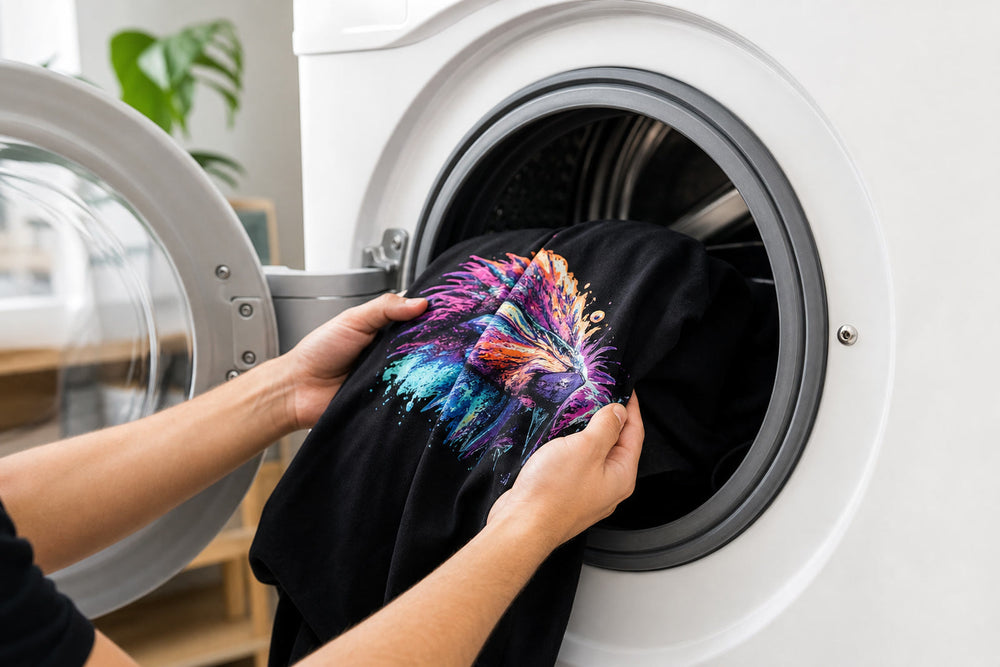
Prepare clear artwork at the intended size using our DTF artwork guide, and remember that every decorated garment should be washed according to the correct aftercare instructions.
Frequently asked questions
Which side should a company logo go on?
The left chest is the traditional choice, but the right chest is equally valid when garment features or other branding make it more suitable.
Can a logo be printed over a zip?
It is generally best avoided. The zip interrupts the artwork and prevents even heat and pressure.
What is the best placement for maximum visibility?
A large back print is usually the easiest to see from a distance, while a chest logo is strongest for face-to-face interaction.