
Correct aftercare helps printed clothing retain its colour, flexibility and adhesion. Excessive heat, harsh chemicals and repeated abrasion can shorten the life of any decorated garment, even when the print was applied correctly.
The care label inside the garment always comes first. The guidance below is a practical routine for most DTF-printed T-shirts, hoodies and workwear.
Wait before the first wash
After a transfer has been applied, allow the adhesive and garment to settle before washing. Waiting at least 24 hours is a sensible minimum unless different instructions have been supplied with the transfer.
For correct application guidance, read how to press a DTF gang sheet.
Turn the garment inside out
Washing inside out reduces direct rubbing between the printed surface, the drum and other garments. Fasten zips and hook-and-loop closures so they do not scrape the design.
Avoid washing printed clothing with rough items such as heavily textured towels where possible.
Use a cool, gentle wash
A 30°C cycle is suitable for many printed garments and helps limit heat stress. Select a gentle or normal cycle rather than an unnecessarily aggressive programme. Do not exceed the garment manufacturer’s care instructions.
Use a moderate amount of ordinary detergent. Too much detergent can remain in the fibres and does not improve cleaning.
Avoid bleach and harsh chemicals
Bleach, strong stain removers and aggressive treatments can damage print colour, adhesive and fabric. Test any stain product on an inconspicuous area and keep it away from the decorated surface unless it is confirmed safe.
Air dry when possible
Air drying is the gentlest option. Reshape the garment and hang or lay it flat away from extreme direct heat. Do not stretch the print while the fabric is wet.
If the care label permits tumble drying, use a low-temperature setting. Repeated high heat can affect both the garment and transfer.
Never iron directly over the print
Direct contact with a hot iron can soften, mark or lift a printed design. Turn the garment inside out and use a low setting, or place a protective cloth between the iron and the decorated area. Avoid steam directly over the transfer.
How to care for embroidered clothing
Embroidery is durable but still benefits from gentle washing. Fasten zips, wash inside out and avoid snagging stitches on rough items. Do not pull loose thread ends; trim only when you are certain the thread is an exposed tail rather than part of the stitching.
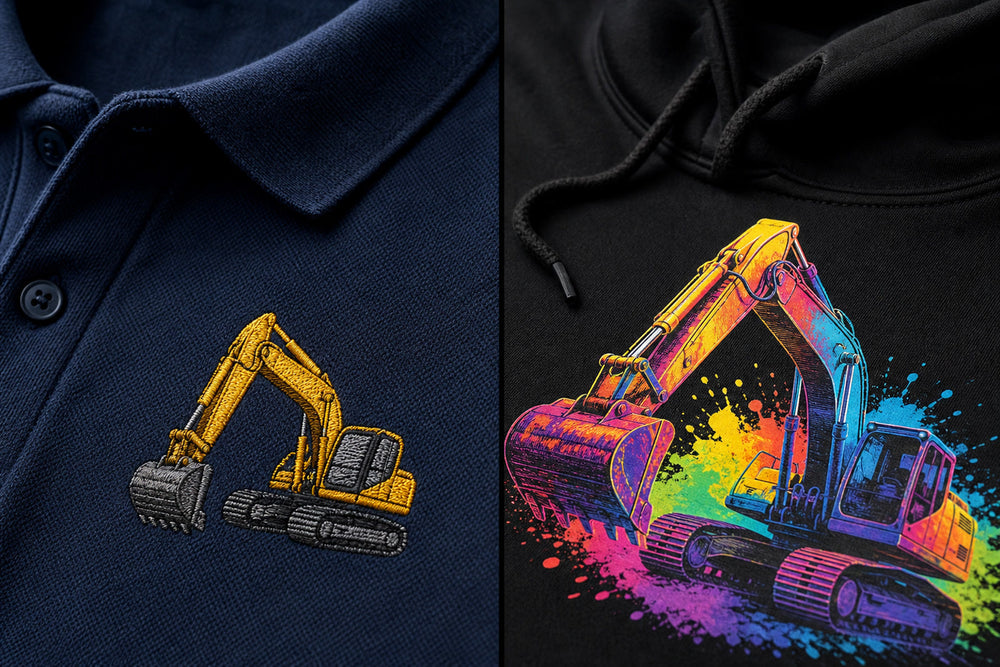
Read embroidery vs DTF printing to understand how the two finishes differ.
What causes a DTF print to peel?
Peeling can result from insufficient heat or pressure during application, incompatibility with the fabric, moisture in the garment, incorrect peeling technique or harsh aftercare. If the print begins lifting immediately, the cause may be application rather than washing.
High-quality artwork also matters to the final appearance. Use our DTF artwork preparation guide before ordering transfers.
Recommended care checklist
- Wait at least 24 hours before the first wash.
- Turn the garment inside out.
- Wash at approximately 30°C, subject to the care label.
- Use a gentle cycle and ordinary detergent.
- Avoid bleach and harsh stain removers.
- Air dry or use low tumble-dryer heat only when permitted.
- Do not iron directly over the design.
- Store the garment dry and avoid folding a hot print against itself.
Care advice for branded workwear
Provide employees with a written care guide when issuing uniforms. Consistent washing improves the appearance of the whole team and reduces premature replacement. For garments and decoration options, browse Printora custom workwear.
Placement can also affect wear. Prints positioned across pockets, seams or high-friction areas may receive more stress, so use our workwear logo placement guide before ordering.
Frequently asked questions
Can DTF clothing go in a tumble dryer?
Use air drying where possible. When the garment care label allows tumble drying, choose a low-temperature setting and avoid repeated high heat.
Can printed clothing be washed at 40°C?
Some garments may permit it, but a cooler wash is generally gentler on the print. Follow the care label and any instructions supplied with the decorated item.
Why should printed clothing be washed inside out?
It reduces direct abrasion against the drum and other garments, helping protect the print surface.