
DTF and screen printing can both produce professional custom clothing, but they suit different jobs. The best option depends on your artwork, garment, quantity, deadline and the finish you want.
For a practical introduction to transfers, read our beginner’s guide to DTF gang sheets. This comparison explains when DTF is the stronger choice and when traditional screen printing can still make sense.
What is DTF printing?
Direct to Film printing places a full-colour design onto a specialist film. Adhesive powder is applied and cured, then the transfer is heat pressed onto the garment. It works well for detailed artwork, photographs, halftones, small text and designs containing many colours. Smooth tonal fades should be prepared as halftones rather than treated as true continuous gradients.
Because separate screens are not required for each colour, DTF is especially useful for short runs, mixed designs and repeat orders. You can place several designs on one DTF gang sheet to use the available space efficiently.
What is screen printing?
Screen printing pushes ink through a prepared mesh screen onto the garment. Each colour normally needs its own screen and setup stage. Once prepared, the process can be quick and economical for large quantities of the same simple design.
Screen printing is widely used for bold logos, event clothing and larger production runs. It can provide an excellent finish, but setup becomes less efficient when artwork has many colours or when only a small number of garments are required.
DTF vs screen printing comparison
| Factor | DTF printing | Screen printing |
|---|---|---|
| Small orders | Very suitable, with little setup per colour | Often less economical because screens must be prepared |
| Large identical runs | Suitable, although pressing is completed garment by garment | Often highly efficient after setup |
| Full-colour artwork | Excellent for photographs, halftones and fine detail. Smooth fades should be converted into a suitable halftone pattern. | More complex because each colour may require another screen |
| Fabric choice | Works on many cotton, polyester and blended garments when correctly tested | Ink and curing method must suit the fabric |
| Personalisation | Easy to vary names, numbers and designs | Less efficient when every garment is different |
Which method produces the best detail?
DTF is normally the easier option for highly detailed artwork. Fine lines, halftone shading and numerous colours can be reproduced without separating the design into individual screens. Good source artwork still matters, so follow our guide on preparing artwork for DTF printing.
Screen printing is particularly strong for clean, bold vector artwork with a limited colour palette. A simple one-colour company logo can look excellent and remain very consistent across a large run.
Which is better for workwear?
For smaller teams, varied garment sizes and several logo placements, DTF gives useful flexibility. It is a good choice for large back prints, colourful branding and designs that would be difficult to reproduce as embroidery.
For a premium stitched left-chest logo, embroidery may be more appropriate. Read our embroidery vs DTF comparison and browse custom workwear to compare garment options.
Durability and aftercare
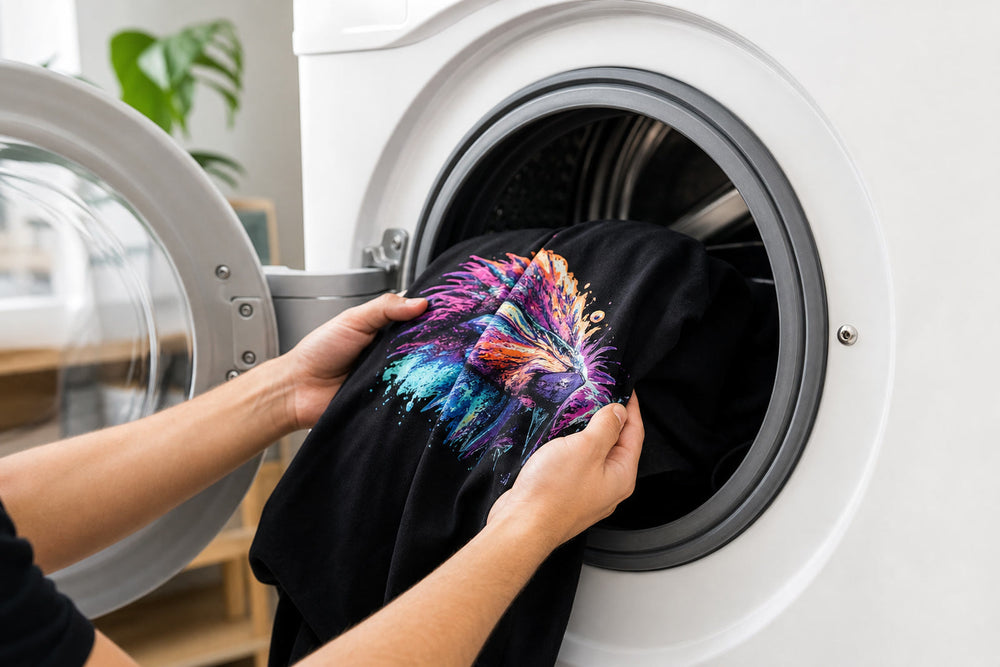
Both methods can last well when the garment is decorated correctly and cared for properly. Turn printed clothing inside out, use a cool wash, avoid direct ironing over the design and limit high-temperature tumble drying. Our complete printed clothing washing guide explains the recommended routine.
Which should you choose?
Choose DTF when you need a small or medium run, full-colour detail, flexible quantities, several designs or personalisation. Choose screen printing when you need a large quantity of the same simple design and the setup cost can be spread across the whole order.
Frequently asked questions
Is DTF suitable for one-off garments?
Yes. DTF is well suited to one-offs and short runs because a separate screen is not required for each colour.
Does screen printing last longer than DTF?
Either method can be durable. Longevity depends on preparation, application, fabric compatibility and aftercare rather than the process name alone.
Can DTF print photographs?
Yes. DTF can reproduce full-colour photographic artwork, provided the file is high resolution and prepared correctly. Tonal transitions within the artwork are reproduced through screened or halftone dot patterns rather than as a true continuous-tone gradient.